All Categories
Featured

How to Secure Critical Illness Benefits
Table of Contents
Include real-life care situations: dementia, mobility loss, single-spouse need. In-home vs. facility, family participation, care quality. The best time to prepare for long-term care is when you don't need it.
serves as the Chief Investment Officer at Langan Financial Group. In this role, he handles investment portfolios, functions as a fiduciary for group retirement strategies, and consults with customers regarding their monetary objectives, threat tolerance, and asset allocation. With a focus on ERISA Law, Alex graduated orgasm laude from Widener Commonwealth Law School.
Alex is likewise passionate about returning to the neighborhood, and has actually taken part in The Foundation of Enhancing Communities' Emerging Philanthropist Program, volunteers at his church, and functions as a board member of Samara: The Center of Person & Family Growth. Outside of work and volunteering, Alex enjoys his time with his partner Sarah, and their 3 kids, Rory, Patrick, and Ava.
Comparing Long-Term Care Insurance Versus Medicare
Your business. Your family's future. Each is worthy of thoughtful preparation that begins with what matters to you. Langan Financial Group offers financial planning and investment management for people, families, and entrepreneur. With offices in Camp Hill and York, Pennsylvania, we serve customers throughout Central Pennsylvania. We help you resolve questions about retirement earnings, financial investment choices, Social Security, and how taxes may impact your financial strategy.
From there, we help you examine your alternatives and establish a strategy that can evolve as your life changes. We also assist companies and organizations examine workplace retirement plans and comprehend their duties as strategy sponsors.
Retirement Planning Ontario CAThe opinions revealed and material provided are for general details, and should not be considered a solicitation for the purchase or sale of any security.
Most Americans wrongly believe Medicare will cover their long-lasting care needs in retirement. This crucial misunderstanding can result in devastating financial repercussions when care is eventually required. Medicare offers restricted protection for long-term care services: As much as 100 days maximum Needs a qualifying 3-day health center stay first Days 21-100 require an everyday copayment ($200+ daily in 2025) Should show continuous improvement to maintain protection Restricted coverage Needs doctor accreditation of medical requirement Must be proficient nursing care (not custodial) Care must be part-time or periodic just the assistance with activities of day-to-day living that Medicare doesn't cover:.
Navigating Future Care Costs in 2026
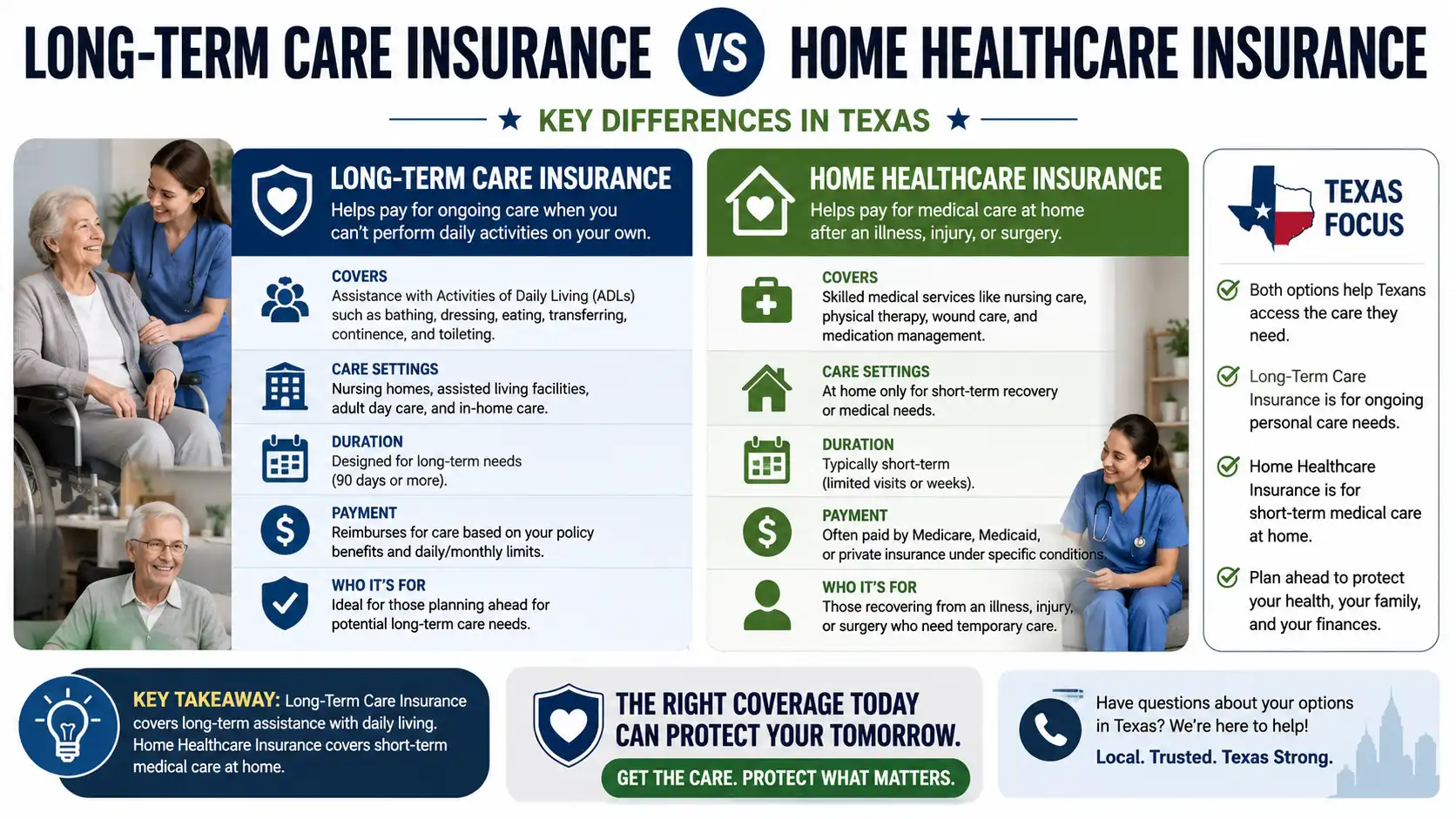
The relationship in between long-lasting care (LTC) and treatment covered by TRICARE, Medicare, or employer health care can be confusing. Examples of medical insurance include your health insurance at work, TRICARE or TRICARE for Life, and Medicare. These cover medical expenses connected to the treatment of an illness or injury.
After treatment, recovery or recovery is not covered. It's about the need for help when you can't carry out normal activities of life and you need assist to operate. LTC is upkeep, not treatment. At this moment, medical specialists have done all they can, and all that's left is recuperation or living with a special needs that makes you require everyday support.
LTC pays when you require assist with eating, toileting, dressing, bathing, transferring, continence, or cognitive impairments. Numerous individuals think about LTC as assisted living home care. A much better description would be stay-at-home care. More individuals use LTC for at home care or helped living than for nursing homes. If you are VA-eligible and discover you need LTC, consult your VA agent for VA LTC choices.
Long-Term Care Options Beyond Medicare
Many Americans mistakenly think Medicare will cover their long-term care requirements in retirement. This critical misconception can lead to ravaging financial consequences when care is eventually needed. Medicare offers restricted protection for long-lasting care services: As much as 100 days optimal Needs a qualifying 3-day medical facility stay first Days 21-100 require a day-to-day copayment ($200+ each day in 2025) Need to reveal continuous enhancement to keep coverage Restricted coverage Needs physician certification of medical necessity Must be knowledgeable nursing care (not custodial) Care need to be part-time or periodic only the assistance with activities of day-to-day living that Medicare does not cover:.
While it may be hard to consider now, it's most likely that you'll require some kind of healthcare or daily living help as you age. Individuals typically believe that Medicare covers long-term care, either at home or in a nursing center, however unfortunately, that's not the case. Medicare does not cover assisted living, proficient nursing, or long-term care.
If you're unable to leave your home for medical or restorative care, Medicare will pay for home health care services. It can include a range of advantages for people who require continuous medical attention and/or custodial care with everyday activities like eating, bathing, or movement in facilities from helped living to full-time, in- home custodial care to a private space in a nursing center.
The expense of a long-term care policy is based upon age, preferred benefit amount and any extra advantages you choose to consist of. That's why it is very important to identify your long-term care needs and level of protection before it becomes an emergency. Thinking about long-lasting care is a foundation in any financial strategy, and there are many options to pick from based on your financial situation and requirements.
Retirement Planning Ontario CACritical Illness Coverage for Older Adults
It's better to be overprepared and covered, than underprepared and economically ravaged.
Medicare does not cover your long-term nursing care or 24/7 in-home services, nor does it pay for your custodial care which includes your day-to-day activities such as consuming, bathing, and dressing.

Why do numerous monetary advisors tell customers they can self-insure for long-lasting care however recommend them to buy supplemental coverage to Medicare? This question has actually plagued me for thirty years. The primary factor this subject is so crucial is that the most typical objection my team and I come across relating to long-term care insurance coverage is, "I'm going to self-insure." Lots of people really desire the defense of insurance, yet their monetary consultant frequently recommends that self-insurance is more suitable.
They routinely buy Part D drug coverage, either combined with Medicare Benefit or a standard Medicare supplement. Financial consultants seldom advise against buying supplemental Medicare coverage.
LTC Options Beyond Medicare
The average claim payment is considerably less than $4,000 annually, according to Telos Actuarial. For 2026, there is a $2,100 cap on drug protection under Part D. If you don't believe me that the claim payments are small, look at the Explanation of Advantages that shows the claim payments from your Medicare Supplement or Part D drug strategy.

Latest Posts

Comprehensive Financial Planning for Elder Care in 2026

Future 2026 LTC Price Forecasts
Explaining Fixed and Fixed Annuities